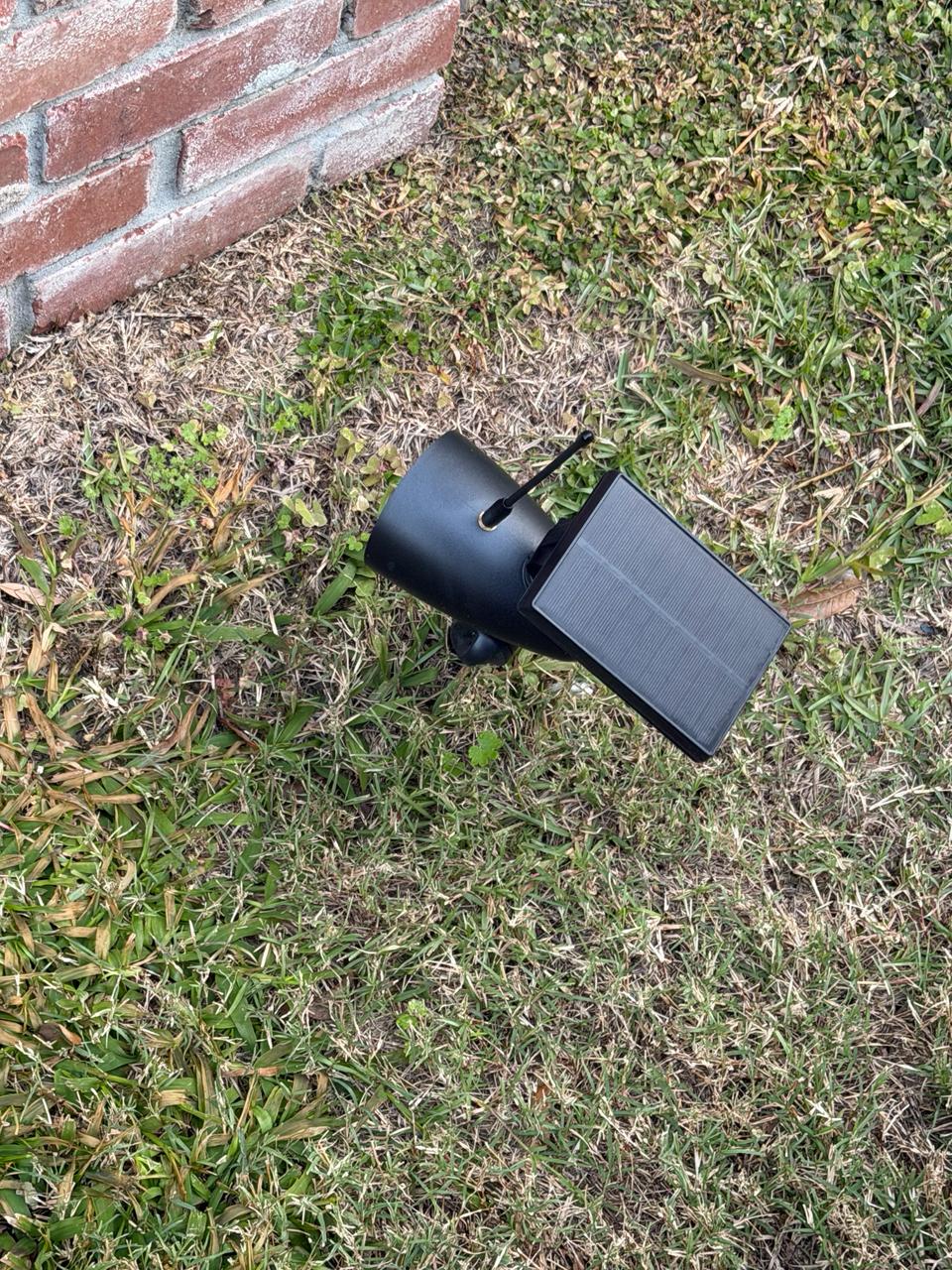
Every Meshtastic and Meshcore project starts with a hardware problem. Mine started at Lowe’s.
I needed an autonomous mesh node that could run indefinitely without external power, survive New Orleans weather, and look like it belonged in a residential neighborhood. The solution cost $6.
The $6 Meshtastic Solar Node Build
A $6 Lowe’s solar garden light provides everything you need: a solar panel, rechargeable battery, charge controller, and weatherproof housing. Gut the LED circuit, wire in a Heltec T114 board with onboard GPS, and you have an autonomous Meshtastic node that charges during the day and relays data around the clock.
The T114 draws minimal power — well within what the solar panel can replenish daily. The GPS module is critical: it provides the precise timing signal (PPS) that enables our patent-pending Tessera Mesh TDMA protocol. Every node knows exactly when to transmit, eliminating the collision storms that plague standard Meshtastic and Meshcore networks under load.
Why Meshtastic and Meshcore Need GPS Synchronization
Standard mesh protocols like Meshtastic and Meshcore use ALOHA-based random access. When network load increases, nodes start talking over each other. Packet loss climbs. Throughput collapses. This is a fundamental physics problem that no amount of software optimization can fix.
GPS-synchronized TDMA solves this at the protocol layer. Each node gets a dedicated time slot synchronized to GPS nanosecond precision. Zero protocol-layer collisions. 5-10x throughput improvement under load. And when you combine that with solar power, you get mesh infrastructure that deploys in minutes and runs forever.
Hurricane-Resilient Communications for New Orleans
I built this in New Orleans for a reason. When hurricanes take down cellular towers and power lines, traditional communications fail. A network of solar-powered Meshtastic nodes — deployed across a neighborhood, hidden in plain sight as garden lights — provides a communications backbone that survives exactly the conditions that destroy everything else.
No grid power needed. No cell towers needed. No internet needed. Just GPS satellites and physics.
From $6 Prototype to Patent-Pending Protocol
This $6 solar light build was the foundation for Tessera Mesh — our patent-pending GPS-synchronized TDMA protocol for consumer LoRa mesh networks. Compatible with Meshtastic and Meshcore hardware. Two provisional patents filed. The core insight validated in a yard in New Orleans.
Whether you’re running Meshtastic, Meshcore, or looking for something that scales beyond hobby use, GPS-synchronized TDMA is the next evolution of LoRa mesh networking.
Sometimes the best infrastructure doesn’t look like infrastructure at all.
Christopher Wolff is the founder of Edge Orbital, Inc. and a Published Patent Inventor building GPS-synchronized mesh networking for defense and first responders. Sign up for updates.